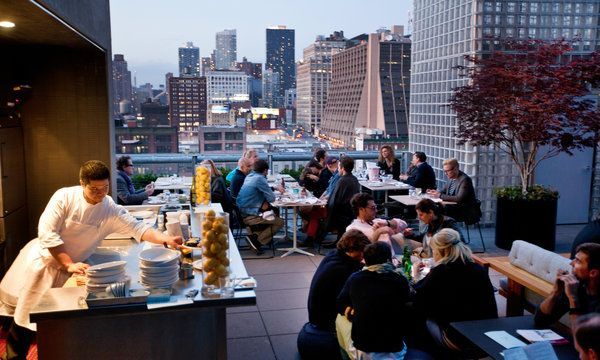
One significant change in the fire sprinkler requirements brings further restriction to occupancies with assembly uses on roofs. We are seeing with more frequency, rooftops being used for lounges, bars, restaurants, passive green space and other similar purposes. Because a roof does not meet the definition of a fire area, protection of the occupants can be less than would be required if the occupancy were located on a floor. Section 903.2.1.6 of the 2015 IBC was added to address this concern. The section states:
When an occupied roof has an assembly occupancy with an occupant load exceeding 100 for Group A-2 and 300 for other Group A occupancies, all floors between the occupied roof and the level of exit discharge shall be equipped with an automatic sprinkler system in accordance with Section 903.3.1.1 or 903.3.1.2.
In simpler terms, in most cases this means; if you put a lot of people on the roof, you are required to install sprinklers in the entire building.
While this provision does not require sprinklers on the roof, it provides additional protection to the occupants on the roof should a fire occur in the building.
In summary, including roof top occupancies in a new building may trigger the need for a fire sprinkler system that might not otherwise be required. Additionally, adding a roof top occupancy to an existing building may require adding sprinklers to the entire building.