The End of Impact Resistant Glazing?

Robert Longo • January 3, 2016

On 21 September 2015, New Jersey formally adopted the 2015 ICC series of codes including the International Building Code (IBC) and the International Residential Code (IRC). This is the first code update in NJ in nearly six years and it comes with many changes.


One significant change is the removal of most buildings in NJ from Wind Born Debris Regions. These are areas that the code defines as hurricane-prone due to high wind speed and/or proximity to the coastline.


This change stems from updates to the wind speed maps that are referenced in the code. By moving the higher wind speeds farther off the coast, the new maps essentially find that NJ is at a lower risk of wind events than previously thought.


Here is an excerpt from the IBC commentary explaining the reason for the change:

“Over the past decade, new data and research have indicated that the mapped hurricane wind speeds have been overly conservative. Significantly more hurricane data has become available, which in turn allows for improvements in the hurricane simulation model that is used to develop wind speed maps. The new hurricane hazard model yields hurricane wind speeds that are lower than those given in previous editions of the code, even though the overall rate of intense storms has increased.”

This code change results in the removal of the requirement for Impact Resistant Glazing in most New Jersey buildings, including all residential buildings.


As evidence by recent storms including Hurricane Joaquin, the continued threat to NJ is likely to be from flood events rather than wind related events.


It is important however to remember that building codes are a minimum standard and there are reasons why one may want to include impact resistant glazing. Building owners are encourage to consult with their architect regarding the appropriate application of all glazing types.

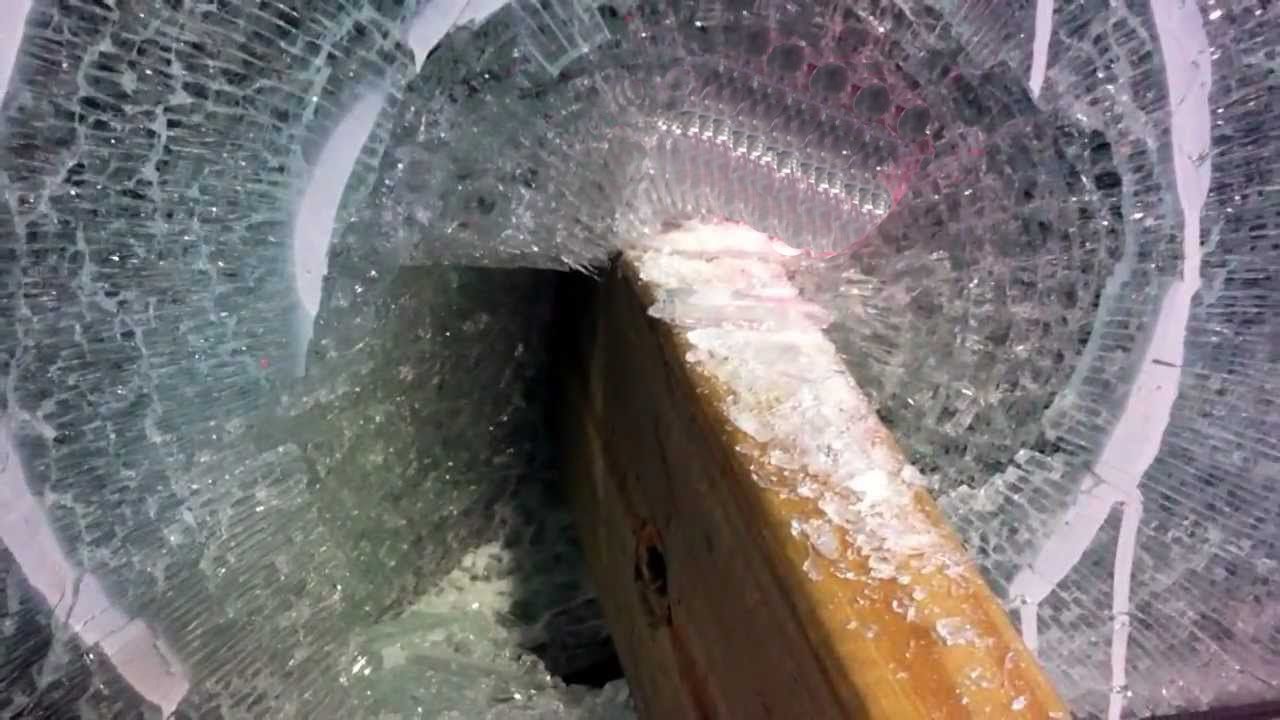
A wooden post is driven through a thick sheet of shattered tempered glass, leaving a circular web of cracks.

For those interested in more detail, below is a summary of the relevant code provisions.


  • IBC 2015 (and 2012) reference ASCE 07-10. This is where the changes are derived from.
  • Buildings will be assigned to Risk Categories that will essentially align wind design with seismic design based on risk to human life, health and welfare that would result from the failure of that type of building.
  • Due to the different wind speed design maps, the windborne debris region will be different depending on the Risk Category of the building being built.
  • Most buildings will fall into Risk Category II & III and use map Figure 1609.3 (1) for the purpose of determining windborne debris regions.
  • Buildings in Risk Category IV (essential facilities) will use map Figure 1609.3 (2)
  • Windborne debris regions are defined as areas within hurricane-prone regions that are either within 1 mile of the coastal mean high water line where the ultimate design wind speed is 130 mph or greater; or any areas where the ultimate design wind speed is 140 mph or greater.
  • By definition, Risk Category III buildings, will use Risk Category II wind speed maps (1609.3(1)) for the purpose of determining if a building is in a wind born debris region.
  • Risk Category II & III buildings will NOT be in wind born debris regions because the 130 mph wind speed line in map figure 1609.3 (1) is over the ocean.
  • Risk Category IV buildings MAY be in wind born debris regions because the 130 mph wind speed line in map figure 1609.3 (2) crosses over land in parts of costal NJ.


In summary, most building in NJ will no longer be in wind born debris regions. Only “Essential Facilities” (Risk Category IV) located within 1 mile of the coast AND in areas with 130 MPH wind will need to meet these requirements.


If you have any question regarding these changes or any other code requirements, just ask the code experts at Cornerstone.

Share this article

Recent Posts

A stylized blue globe centered on North America, featuring glowing lines connecting various locations across the continent.
By Cornerstone Architectural Group September 6, 2022
6 September 2021 Today, New Jersey adopted the 2021 version of the International Code Council (ICC) codes along with updated versions of the National Electric Code, the National Standard Plumbing Code, and other related standards. New Jersey’s Uniform Construction Code (NJUCC) adopts codes by regulation. The codes are administered by the Department of Community Affairs […]
A modern conference room with a long wooden table, plush chairs, glass wall partitions, and a landscape wall painting.
By Cornerstone Architectural Group November 1, 2021
The 17,000 square foot three-story office building was designed to be renovated in phases to allow BlueCrest to continue to operate and grow during the renovation. The program included administrative offices, conference rooms, clinical offices and rooms for group therapy, yoga and meditation. The space was designed to be warm and welcoming with an abundance […]
A two-story gray building with porches and white railings, surrounded by trees and a blooming dogwood tree.
By Cornerstone Architectural Group November 1, 2021
The town of Sea Girt is unveiling renderings of their long awaited, historic, library expansion project in the hopes of gaining a surge of public support. The current 1,500 square foot Cornerstone Architectural Group, LLC is proud to announce the 30th Anniversary in our building at 202 Hamilton Boulevard, in South Plainfield New Jersey. Originally […]
SHOW MORE