Is Your Property Even Zoned for Your Use? What to Check First
June 23, 2026
Just the Highlights
- Zoning and use classification are two separate things. A property can be zoned correctly and still not permit your specific business activity.
- The prior certificate of occupancy tells you how the building was last legally approved for use, and it matters more than most people realize.
- Before going to a zoning board, make sure the building can actually support what you want to do. Getting approvals you cannot use is an expensive way to learn this lesson.
- In New Jersey, what a zoning ordinance says and what a local building department will actually approve in practice are not always the same thing.
- The earlier we get involved, the more options you have. Call us before you sign.
You Found the Space. Now for the Real Question.
We get calls like this more often than you'd think. Someone has found a building they love. Location is right, the price feels reasonable, the broker says it's perfect for what they need. They're already mentally planning the layout. And then, somewhere in the process, the question finally comes up: is this property actually zoned for what they want to do?
Sometimes the answer is straightforward. Often it isn't. And the people who find out before signing are the lucky ones.
Commercial zoning due diligence sounds like something you can handle with a quick map lookup. It isn't. And for any project that involves a change of use in a commercial building (moving a new business into a space that was last approved for something different), the stakes are even higher. The use classification framework, the gap between what a municipality theoretically permits and what a building department will actually approve, the prior-use history of the building, the code implications of changing that use: all of it matters. And when something goes sideways, it tends to go sideways in a way that costs serious time and money.
We've seen it happen more times than we can count. Here are a few examples that stick with us.
Two Stories That Show Why This Matters
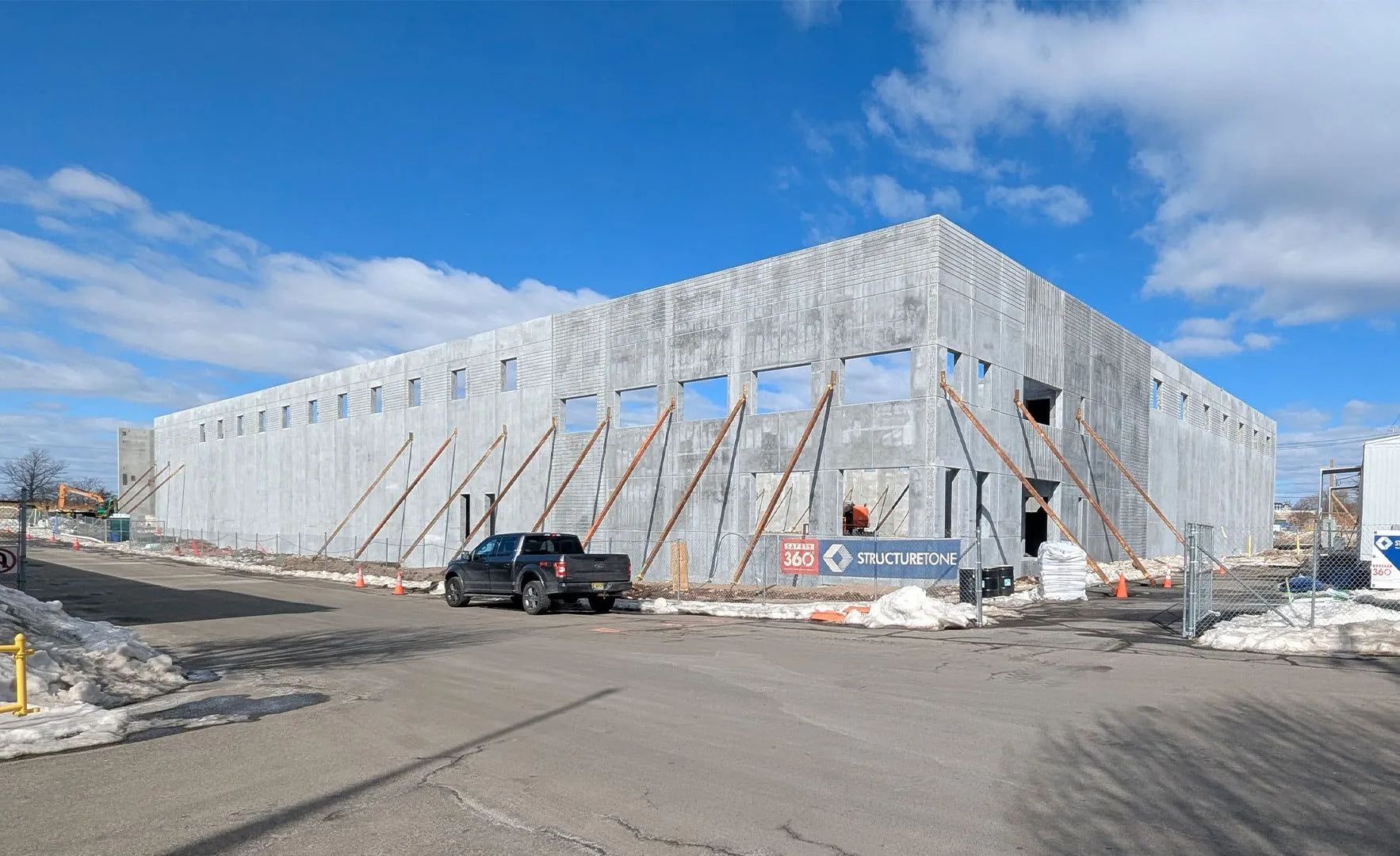
The first involves a food production company that makes a specialty snack product distributed through grocery retailers. They bought two large buildings to expand their manufacturing operation. The property was zoned for warehousing and manufacturing. Sounded like a clean situation.
It wasn't. When we dug into the approvals the original developer had received from the town, the resolution only permitted warehousing. The developer had agreed at the time of their own approvals to restrict the use to warehousing only, even though the underlying zoning district allowed manufacturing. The Company bought the buildings without knowing that restriction was in place. Now we're working through the legal process to unravel it. Attorneys are involved, and it's costing them at least a month of delays. For a growing food manufacturer, time is not something they have to spare.
The second story is smaller, but maybe more instructive. A client bought a converted building around the corner from our office, an old house that had been used as an office or a barbershop over the years. They wanted to turn it into a daycare center. So they did everything right from a zoning standpoint: hired a civil engineer, went through the zoning board process, got a use variance, paid their attorneys. In New Jersey, even the simplest board approval adds up to $20,000 to $30,000 by the time you're done. They got their approval. Then they came to us.
We did a code analysis. A two-story wood-frame building cannot be used as a daycare center. That's a building code issue, not a zoning issue, and the zoning board process does not surface it. They had done everything right by the zoning process and still ended up with a project that wasn't buildable. The building went back to office and apartment use. The money spent on approvals was gone.
We see versions of this regularly. The details change, but the pattern doesn't: someone moves forward without the full picture, and the discovery comes at the worst possible moment.
Change of Use, Change of Occupancy, and Why the Difference Matters
Here is the distinction that trips people up most often: zoning and building code use classification are two separate regulatory systems, and a change of use in a commercial building can trigger requirements under both simultaneously, or neither, depending on the specifics. Zoning tells you what category of activity is generally permitted in a district. It does not tell you whether your specific use is permitted without another layer of analysis.
In New Jersey, municipalities adopt zoning ordinances based on their own master plans. A commercial zone in one town might allow retail, restaurants, and professional offices but exclude light manufacturing. The town next door might have a mixed commercial-industrial designation that allows all three. Two properties on opposite sides of a street can be in entirely different zones with entirely different rules. As Bob Longo, AIA, principal of Cornerstone Architectural Group and a licensed code official in New Jersey, puts it: "New Jersey is a weird state. We have 500 and some municipalities and a very strong home-rule tradition. Every town has its own zoning ordinance."
Beyond zoning, building codes assign use groups to buildings based on how they're occupied. These use groups determine allowable area, required fire protection, egress requirements, and structural loads. A building previously used as a warehouse may be classified as Storage (S) occupancy. A tenant who wants to use it for light manufacturing needs Factory (F) occupancy. That change of occupancy in a commercial building is not administrative. It triggers a formal code analysis of whether the existing structure can support the new use, and often requires physical upgrades before a certificate of occupancy will be issued for the new tenant.
Parking is another variable that catches people off guard. Change a use from warehousing to manufacturing in the same building and your parking demand can increase by a factor of four or five under the ordinance. Change from a professional office to a medical office and the requirement goes up significantly. These numbers are set by the local ordinance, and municipalities take them seriously. We've worked with a town that required a client to physically demolish paving and add landscaping because the new use generated less parking demand than what was on site. The client did not want to tear up good pavement, but the town required it as a condition of approval.
What the Prior Certificate of Occupancy Tells You
Every commercial building in New Jersey should have a certificate of occupancy on file with the local building department. That CO reflects how the building was last permitted for use. It's one of the most informative documents you can review before committing to a space.
If the prior CO reflects a use that is substantially different from what you're planning, you're starting a change-of-use analysis. That triggers a review of whether the existing building infrastructure (sprinkler systems, means of egress, electrical capacity, HVAC, structural loading) can accommodate the new use group.
The CO also tells you whether the building has been properly permitted along the way, or whether prior tenants made modifications without pulling permits. We've walked into spaces where tenants added partition walls, moved plumbing, or modified exits without filing drawings with anyone. All of that becomes your problem when you go to get your own permit. The building department is not going to approve your project on top of someone else's unpermitted work.
If there is no CO on file at all, that's important information to have before you sign anything.
The Variance Question: When Your Use Isn't By Right
Sometimes a client has found a property where their intended use isn't permitted by right under current zoning, but might be achievable through a use variance or conditional use approval. This is where things get complicated fast.
A use variance in New Jersey requires demonstrating positive and negative criteria: that the proposed use serves the general welfare and won't create substantial detriment to the zone plan or surrounding community. That's a legal standard argued before a zoning board of adjustment under New Jersey's Municipal Land Use Law. The process involves public hearings, board review, and often opposition from neighboring property owners. The costs add up quickly.
Our position on variances is direct: Sometimes they're worth pursuing, and sometimes they're a project killer in disguise. If a municipality has consistently denied similar applications and the surrounding context would make approval difficult to defend, we'll tell you that clearly before you spend money on the process. If the pathway looks viable, we can help put together a strong application and work through it.
The daycare situation above is a case where someone got their variance and it didn't matter. The building code issue was independent of the zoning issue. Running both analyses in parallel, at the front end of the project, is how you avoid that kind of collision.
Why the Civil Engineer and the Architect Need to Be in the Room Together
One pattern that creates consistent problems is when the civil engineering process and the architecture process get treated as separate tracks. We're working on a warehouse right now where the civil engineer laid out all of the loading bays the client wanted. It was a good site plan. The problem is that there's no room between those loading bay doors to locate the code-required exit doors. The client is losing four bays. For a manufacturing or distribution facility, those bays are the whole point of the building.
In New Jersey, civil engineering for planning board and zoning board approvals needs to be close to complete to get through the approval process. The architecture at that same stage might only be at ten or fifteen percent. So there's always a mismatch: the civil work is dealing with grading, drainage, stormwater detention, and parking at a refined level, while the building layout is still schematic. If those two tracks aren't coordinated from the beginning, the civil work can solve one set of problems while creating a different set of problems for the architecture.
Our strong preference is to be involved early enough to participate in those conversations, at the table when site decisions are being made, not inheriting a fully approved site plan and then discovering what it doesn't support.
Why Local Knowledge Is Part of the Service
Here is a recent example. A client in the flavor and fragrance industry needed bulk storage silos at their facility. They sent us the specifications and asked us to handle the permits. We looked at the height and immediately saw that the silos were two feet over the threshold for administrative approval in that municipality.
Administrative approval, the streamlined process most towns offer for lower-impact work, is dramatically faster and less expensive than going before a planning or zoning board. For this client, staying under the threshold meant saving roughly six months and somewhere between $50,000 and $60,000 in approval costs. We went back to the silo manufacturer and asked whether the vessel could be made slightly wider and shorter to come in under the required limits. They could do it. Problem solved before it became a problem.
That kind of catch requires knowing how a specific municipality measures building height, what the administrative approval thresholds are, and where the opportunities are to design around a regulatory requirement. These details vary significantly from town to town.
Part of what makes this analysis reliable is who's doing it. Bob Longo holds a code official license in New Jersey, the same credential held by the building department officials who review permit applications. That credential is part of how we navigate the variation between municipalities.
That credential also brings a broader advantage. It allows us to advocate more effectively for our clients when interpretations differ, engaging with building officials from a shared technical foundation. Those conversations tend to be more focused and productive, which benefits the project as a whole.
What a Pre-Lease Zoning and Code Review Actually Looks Like
When a client brings us in before signing, here is what we look at:
Municipal zoning verification.
We confirm the zoning district designation, pull the applicable ordinance, and identify what uses are permitted by right, conditionally, and prohibited. Reading a zoning map is not the same as reading the ordinance text, and the text governs.
Use group and code analysis.
We compare the intended occupancy classification against the existing construction type and building characteristics. If there's a use group change, we identify what code-required upgrades that triggers.
Certificate of occupancy review.
We pull the existing CO from the building department, review it against what the tenant plans to do, and flag discrepancies or gaps. If there's no CO on file, that matters.
Building department inquiry.
There's often a meaningful gap between what an ordinance says and what a specific building official will approve. We make the call. A direct conversation with the department early on surfaces issues that no amount of ordinance reading will reveal.
Variance viability assessment.
If the project requires a variance or conditional use approval, we give you a candid read on how achievable that is before you invest in the process.
This is work that can usually be done quickly, often within a few days for a straightforward property. It is not a full design engagement, and the cost is modest relative to what's at stake. For starters, let us take a look. before you sign a lease or purchase the building. You can learn more about how we work with commercial clients on our How We Help page.
Frequently Asked Questions
What is a change of use for a commercial building?
A change of use occurs when a commercial building is occupied for a purpose that differs from its last permitted use. Even if no physical construction is planned, a change of use can require a new building permit, a code analysis, and potentially significant upgrades to fire protection, egress, electrical, or structural systems before a new certificate of occupancy will be issued. A change of occupancy is a related but distinct concept: the new use falls into a different occupancy classification under the building code, which typically triggers a more comprehensive review. Both can apply to the same project simultaneously.
How do I find out what my property is zoned for?
Contact the municipal zoning or planning office. Most New Jersey municipalities maintain zoning maps and ordinances online or through the town clerk. But confirming that your specific use is permitted, and understanding any conditions that apply, is where it gets technical. A call to the municipality or a conversation with an architect familiar with the area can save significant time.
Can a landlord or broker confirm that my use is permitted?
A landlord can represent that a use is permitted. Brokers often say something to that effect. But those representations are only as reliable as the research behind them, and brokers are primarily motivated to close the deal, not to work through the code implications of your tenancy. Independent verification before you sign is the safer path.
What if I get zoning approval and then find out there's a building code problem?
That is exactly the daycare situation described above. Zoning approvals and building code compliance are separate processes, administered by separate officials, applying separate rules. Getting one does not guarantee the other. Running both analyses at the front end, before you commit to a property, is how you avoid spending money on approvals you cannot use.
When does a zoning issue need a land use attorney versus just an architect?
For most commercial properties, an architect with code expertise and local knowledge can answer the core question: is this viable? If you're pursuing a use variance before a zoning board, or if there's a legal dispute over interpretation or prior-use rights, that's where a land use attorney adds value. We work alongside attorneys on variance applications regularly and can help you understand when legal representation makes sense.
How much does a pre-lease review cost?
It depends on the complexity of the property and the intended use. A straightforward review can often be done quickly and at modest cost relative to what's at stake. If the analysis reveals significant issues or a variance is required, the scope expands accordingly. We're glad to discuss it before any engagement begins.
Talk to Us Before You Sign
The most common piece of advice we give—and the one most often ignored until it's too late—is to hire an architect before signing a commercial lease or purchasing a building. Not after. Before. A change of use in a commercial building is rarely as simple as it looks from the outside, and the issues that surface during a pre-lease review are almost always easier and cheaper to address before you're committed. If you're not sure what a commercial architect actually does at that stage, this post is a good place to start.
We've done this kind of analysis for all kinds of commercial properties: Office buildouts, industrial conversions, specialty manufacturing facilities, municipal projects. In every case, the earlier we're in the conversation, the more useful we can be.
If you're evaluating a commercial property and want a straight answer on whether it works for your intended use, we're glad to take a look.
Reach us and Apply for a consultation
Share this article
Recent Posts