What a Commercial Architect Actually Does (And Why It’s Not What You Think)
Robert Longo • May 27, 2026
Just the Highlights
- Many clients come to us assuming our role is limited to producing drawings. Commercial architecture is a completely different animal.
- A good commercial architect manages the entire project ecosystem (design, permitting, consultants, code compliance, and client communication) from day one through construction. Not all of them do.
- Hiring the wrong type of architect (or hiring too late) is one of the most expensive mistakes commercial clients make.
- The real value of a great commercial architect isn’t the drawings. It’s what they prevent from going wrong.
- Here’s what you should expect from your architect, what we actually deliver, and why it matters more than most clients realize up front.
What Clients Think Architects Do — And What Good Architects Actually Do
We’ve been doing this for 35 years.
And in those 35 years, we’ve had some version of the same conversation more times than we can count. A new client comes in, smart person, accomplished in their field, not inexperienced in the business world, and somewhere in our first meeting, they say something like: “So you’ll draw up the plans and then we hand it off to the contractor?”
That’s the moment we know we have some explaining to do.
It’s not their fault. The popular understanding of what architects do is stuck somewhere between a guy at a drafting table (dating myself here) and the dramatic reveal moment on a home renovation show. In reality, when an architect designs a commercial building, neither of those images applies. The scope of architectural work is far broader than most people assume.
So let us set the record straight. Understanding what you’re actually buying when you hire a commercial architect (and what you’re not getting when you don’t) is genuinely important before you sign a lease, pull a permit, or break ground on anything.
First, Let’s Clear Up the Most Common Misconceptions
1. Projects are linear
Clients expect the process to be linear. Sign the agreement, design starts, drawings appear, construction begins. Neat and sequential.
It’s not. Architectural design is interdependent. Take something as specific as a mechanical equipment package. Before we can spec that equipment, we need to understand how the space will be used, what the structural system looks like, what power and gas are available, and how it all coordinates with the rest of the building. Everything feeds everything else. That’s not a flaw in the building design process. It’s the nature of it.
2. There’s a simple cost per square foot
We hear this one constantly:
“Isn’t there just a cost per square foot?” There are ballpark ranges, sure. But they have enormous variables attached to them. Construction cost depends on building type, condition, use, location, materials, market conditions, and a dozen other factors. Clients hear a number from a friend or read something online, and that number lodges itself firmly in their head. Part of our job is helping them replace that number with an accurate one, before they’ve committed to a scope they can’t afford.
3. Approvals are quick
Clients often think: Submit for permit, start construction a week later. In New Jersey, where we do most of our work, that’s almost never the case. Give yourself a month or two as a baseline, and on complex projects, much longer. We’re currently working with clients waiting on electrical power upgrades from utility companies that will take the better part of a year. That’s not a paperwork issue. It’s just the reality of infrastructure in a dense, heavily regulated state. The design and construction process has many moving parts, and the sooner a client understands that, the better decisions they make.
Managing expectations honestly, whether clients want to hear it or not, is one of the most important things we do.
What We’re Actually Doing From Day One
When a commercial client engages us, here’s what actually starts happening. Most of it is behind the scenes.
We analyze your project against the applicable codes before a single line gets drawn. Bob Longo, our principal and founder, is a licensed architect and a licensed code official in New Jersey. That second credential might seem like a footnote, but it’s not. He originally got it because he kept getting shut out of Department of Community Affairs code seminars that were only open to licensed officials. His solution: get the license. He passed the exam without much trouble because he already had the knowledge. Now he gets access to ongoing training that keeps him sharper than most.
What that means practically is that when we look at a project, we’re reading it the way a code official will. We know what’s going to generate a comment letter, what’s going to require a variance, and what a fire official is going to push back on. A lot of architects genuinely aren’t strong on code. We say that not to be unkind, but because it’s true and clients deserve to know it. When code issues surface late, they’re expensive. Catching them in week one is a different conversation entirely.
We coordinate your entire consultant team, and we hold the contracts. On most commercial projects, the architect isn’t the only professional involved. There’s typically a structural engineer, an MEP engineer (mechanical, electrical, and plumbing), and depending on the project, a civil engineer, fire protection consultant, landscape architect, and various specialists. Architects work closely with all of these disciplines. We hold the contracts for our consultants. We oversee their scope, schedules, and deliverables. The client gets one point of contact.
Not every firm works this way. In fact, plenty don’t. We see the debates on professional forums all the time. The argument against it is that taking on consultant contracts increases liability. And maybe it does, marginally. But here’s our counter: if you don’t control the purse strings, you can’t really control the project. We’re currently working on a project where the owner is managing the MEP engineer directly. That engineer isn’t responding to calls, emails, or anything else. The client is frustrated, the project is slower than it should be, and nobody wins. That’s what uncoordinated consultant management looks like, and it’s more common than clients realize.
Our go-to consultants on MEP and structure get well over 80% of our work. They know us, we know them, and we’ve built the kind of relationship where if something needs to jump the line on a tight timeline, it can. That doesn’t happen when everyone’s working in silos.
Think of it the way a conductor relates to an orchestra. The conductor can’t play every instrument. But she knows exactly what each one is supposed to be doing, when it comes in, and what it sounds like when something’s off. That’s the architect’s role on a construction project.
We manage the municipal approval process. This is where a lot of commercial projects lose time and money, and where clients get genuinely frustrated. Permit reviews, zoning board hearings, planning board submissions, fire official approvals: these are not linear processes, and in New Jersey, they’re particularly layered. We have over 500 municipalities in this state, each with its own zoning ordinance, its own board, its own interpretation of how things work. Local knowledge matters enormously here. We know how to submit packages that minimize comment cycles. We know who to call when something stalls. That knowledge has real dollar value.
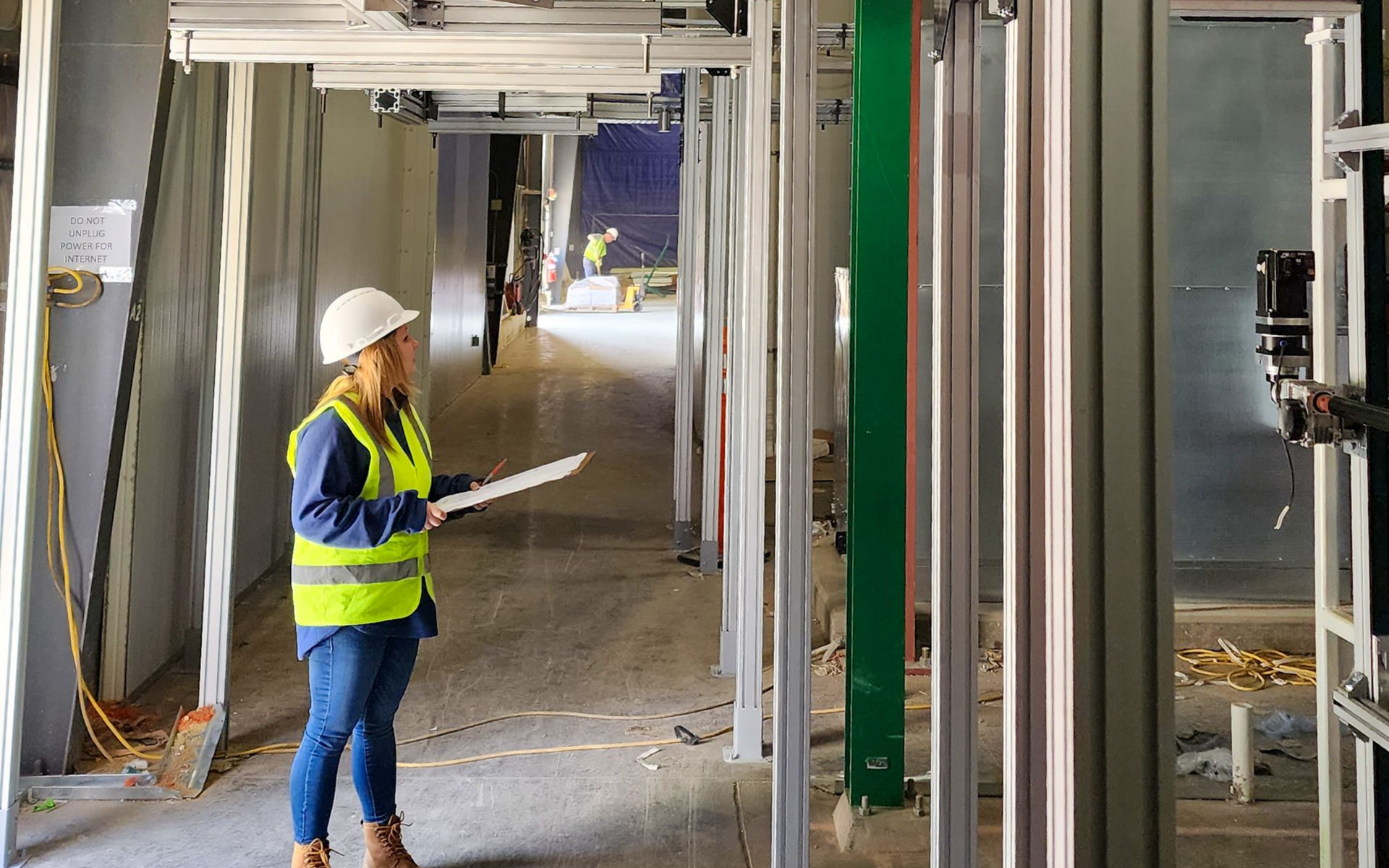
We stay with you through construction. This is the part that surprises some clients who’ve worked with firms that hand off drawings and disappear. We provide construction administration, which means reviewing submittals and specification compliance, responding to contractor RFIs (requests for information), making site visits, and verifying that what’s being built actually matches what was designed. Good project management through this phase protects the client’s investment. When there’s a discrepancy, and there are always discrepancies, we’re there to work through it. Construction is complicated. Nothing goes perfectly. What matters is that someone is advocating for the client when things come up.
Unlike contractors, we don’t have a financial stake in what things cost. Contractors’ opinions are often influenced by what things cost them. Ours aren’t. That independence matters.
For a closer look at how we guide projects from first conversation through construction completion, visit our
How We Help page.
The Commercial vs. Residential Distinction Matters More Than You Think
We are a commercial-focused firm. That’s a deliberate choice, not a limitation.
Commercial architecture and residential architecture are genuinely different disciplines, not just in scale, but in the regulatory environment, the project delivery models, the consultant structures, the code frameworks, and the way buildings are designed to function as business assets. A commercial architect can work across many building types: Office buildings, industrial buildings, healthcare facilities, retail centers, municipal projects. Industrial architects, interior architects, and firms focused on interior design and interior architecture each bring different expertise to the table. A firm that does both commercial and residential work can serve certain clients fine. But a firm that has spent 35+ years in commercial work has a depth of knowledge in that world that a generalist practice simply can’t match.
There are also specialist roles that often intersect with commercial projects. Civil engineers are responsible for site design, including grading, drainage, and utilities. Structural and MEP engineers handle the building systems that support and service the structure. Landscape architects focus on the design of exterior spaces, including landscaping and hardscaping. On larger commercial projects, an architect may coordinate all of these disciplines under a single contract. Architects must understand how every piece connects, even when specialists are handling the details.
Sustainability and energy efficiency are increasingly part of commercial building design as well. A good commercial architect should be able to speak to sustainable strategies honestly, helping clients understand what actually moves the needle versus what’s mostly marketing.
When we walk into a municipal planning meeting, the people on the other side of the table know who we are. When a contractor submits an RFI on one of our projects, they’re getting a response from someone who has navigated that exact type of situation many times before. That experience doesn’t appear on a fee proposal. But it shows up in how your project runs.
The Hidden Value: What We’re Preventing
Here’s what most clients don’t fully appreciate until they’ve been through a difficult project: a significant part of the value a good commercial architect provides is in what doesn’t happen.
We’ll give you two real examples.
First: A client recently purchased two large buildings to manufacture a snack food product. The buildings were zoned for warehousing and manufacturing, which looked fine on the surface. What they didn’t know when they bought them was that the original developer had received municipal approvals restricted to warehousing only. The buildings were zoned for manufacturing, but the resolution tied them to warehouse use. Now we’re working to unravel it, attorneys are involved, and the client has lost months they can’t get back. Time is extremely valuable to a manufacturing operation. This type of zoning issue is entirely avoidable when an architect is involved early in the project.
Second example: A client bought a building near our office intending to convert it to a daycare center. They went through the full zoning board process, hired a civil engineer, retained attorneys, appeared before the board, and got approval. Then they came to us and said, “We’re all set. We just need drawings.” We did a code analysis and discovered immediately that they would not be able to put a daycare center in a two-story wood frame building. The code simply doesn’t allow it. The project was dead. The client had spent $20,000 to $30,000 or more on zoning approvals they couldn’t use. They ended up keeping the building as an office and apartment.
If we’d been in the room at the beginning, that conversation would have happened before any money was spent.
These are real things. They happen to real clients when professional architect oversight isn’t there from the start. Sometimes the most effective thing we can do for a client is the thing they never find out about: The problem we identified and addressed before it became one.
So When Should You Bring Us In?
Earlier than you think.
The single most common missed opportunity we see is clients who engage us after they’ve already signed the lease, bought the property, or had preliminary conversations with a contractor about scope and budget. By that point, some decisions are already locked. And sometimes those decisions have real consequences for the design, the budget, and the schedule.
Commercial real estate brokers are often the first call. Contractors sometimes get involved before anyone else. Civil engineers can get deep into site design before an architect is in the picture, which creates its own set of problems. We’re working on a warehouse project right now where the civil engineer laid out loading bays so tightly that there’s no room left for required exit doors between them. The client is now losing dock positions they planned on. That’s the kind of thing that doesn’t happen when everyone is coordinating from the start.
We can join a site search. We can look at a building with your broker before you commit, and tell you what we see—zoning considerations, code implications, what the space can and can’t be used for, and what a realistic construction budget looks like. All of that information has genuine value. It can change a decision and it can prevent a bad one.
Our best advice to clients is simple: You do what you do, let us do what we do. It’s going to be better for everybody that way.
Knowledge, Integrity, Experience — In That Order
Those three words have been part of how we describe ourselves for a long time. They’re worth explaining.
Knowledge means we know what we’re doing: not just design, but code, process, consultant coordination, municipal approvals, construction. Thirty-five years of commercial building projects across corporate interiors, institutional buildings, manufacturing facilities, and municipal work. We’ve been in these situations before.
Integrity means we tell you the truth. About timelines, about costs, about what’s realistic. Commercial clients don’t need a firm that tells them what they want to hear. They need one that tells them what they need to know, before it becomes a problem, and then delivers on what it promises.
Experience means we’ve earned the right to say the first two things. Anybody can claim knowledge and integrity. We can point to 35 years of commercial work, long-term client relationships, and a track record of projects delivered the way they were supposed to be delivered.
That’s what you’re getting when you hire a commercial architect. Not just drawings. A partner who knows the terrain, tells you the truth, and stays with you through the whole process.
If you’re early in a project, or even just thinking about one, we’re happy to have that first conversation. No pressure, no pitch. Just an honest discussion about what you’re trying to accomplish and whether we’re the right fit to help you get it done.
Frequently Asked Questions
What’s the difference between a commercial architect and a residential architect?
Commercial and residential architecture are genuinely different disciplines. Commercial architecture involves a different regulatory environment, different building codes (primarily the International Building Code), a more complex consultant structure, and buildings designed to function as business assets rather than personal residences. A firm that works primarily in commercial architecture develops a depth of knowledge in that world that a generalist practice doesn’t have.
How early in a project should I involve a commercial architect?
As early as possible, ideally before you’ve committed to a site or signed a lease. An architect can help you evaluate whether a building or site actually supports your intended use, identify code and zoning issues before they become expensive problems, and give you realistic cost and timeline expectations before you’re locked in.
Why does it take so long to get building permits?
Permit timelines depend on the municipality, the complexity of the project, and factors outside anyone’s control, including utility upgrades, planning and zoning board schedules, and agency review cycles. In New Jersey, where we do most of our work, give yourself at least a month or two as a baseline for straightforward projects, and significantly more for projects requiring board approvals or variance processes. We help clients build these timelines into their planning from the start so there are no surprises.
What does “construction administration” actually mean?
Construction administration (CA) is the phase of architectural services that takes place during construction. It includes reviewing contractor submittals and shop drawings, responding to requests for information (RFIs), making site visits to observe construction progress, and verifying that what’s being built matches the approved design. It’s how the architect stays involved and protects the client’s interests through the end of the project.
Why does Cornerstone manage the consultants rather than letting the owner hire them separately?
When we hold the contracts for the consultants (structural, MEP, and others) we can actually manage their scope, schedule, and coordination. When consultants are hired and managed separately by the owner, the architect loses the ability to hold them accountable. Drawings fall out of coordination, gaps appear between trades, and the client ends up managing technical decisions they shouldn’t have to. It’s not unlike the problems that come with an owner acting as their own general contractor.
Share this article
Recent Posts