Ramboll's Princeton Office Redefines the Hybrid Workplace
Scott Marchio, LEED AP • June 8, 2026
As organizations continue to rethink the role of the office, global engineering firm Ramboll set out to answer a question many companies are still wrestling with: what makes people genuinely want to come in?
Ramboll partnered with Cornerstone Architectural Group, who led the architecture and interior design, working alongside Engineering Driven Design, JSD Office, and Unity Construction to transform the firm's Princeton office into a workplace prototype centered on wellbeing, flexibility, and employee choice.
Rather than relying on return-to-office mandates, the project reimagines the workplace as a destination employees actively want to use. The result balances collaboration, focused work, and social connection while reducing overall real estate demands and supporting Ramboll's hybrid workforce strategy.
A Workplace Built Around Experience
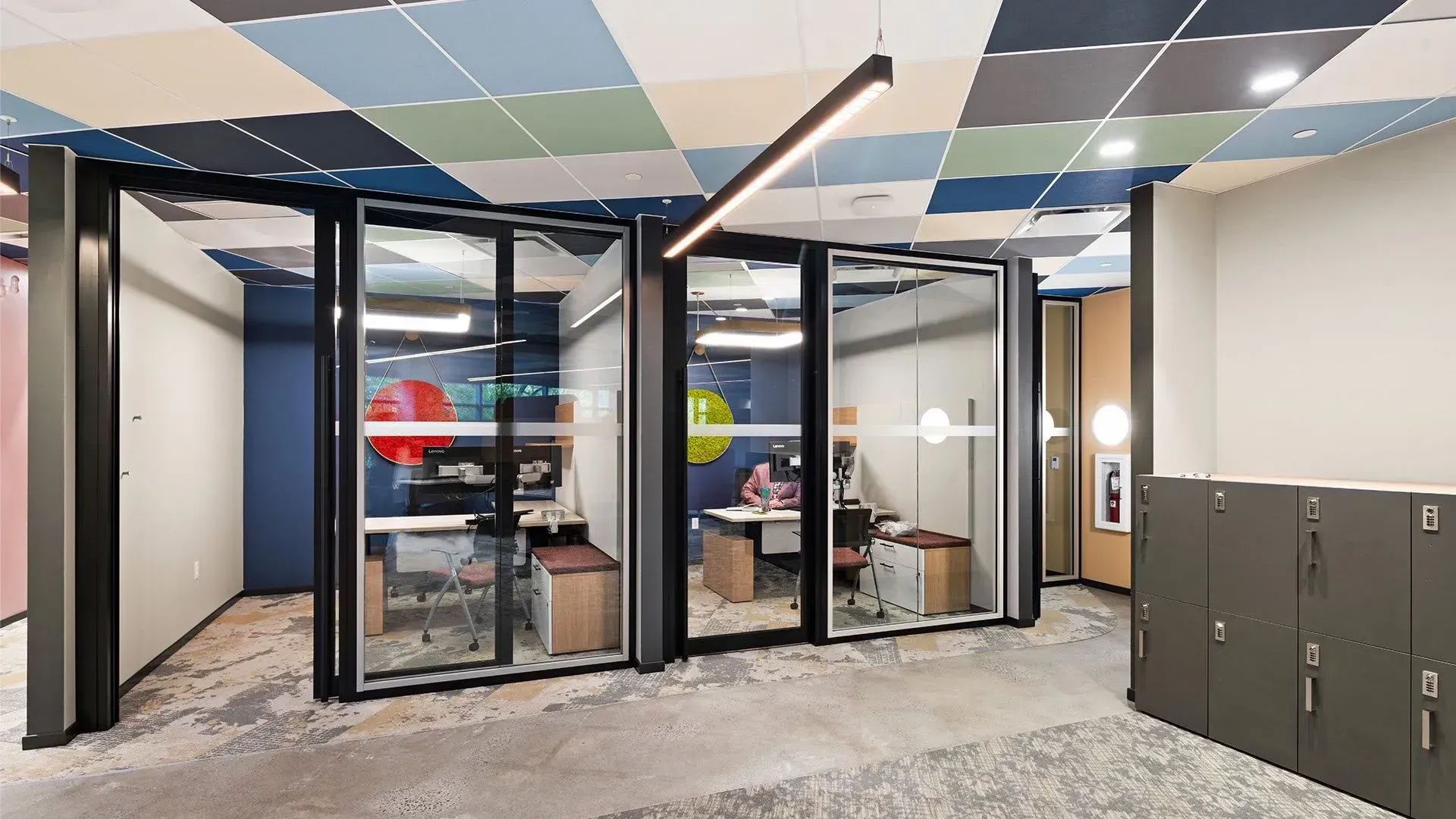
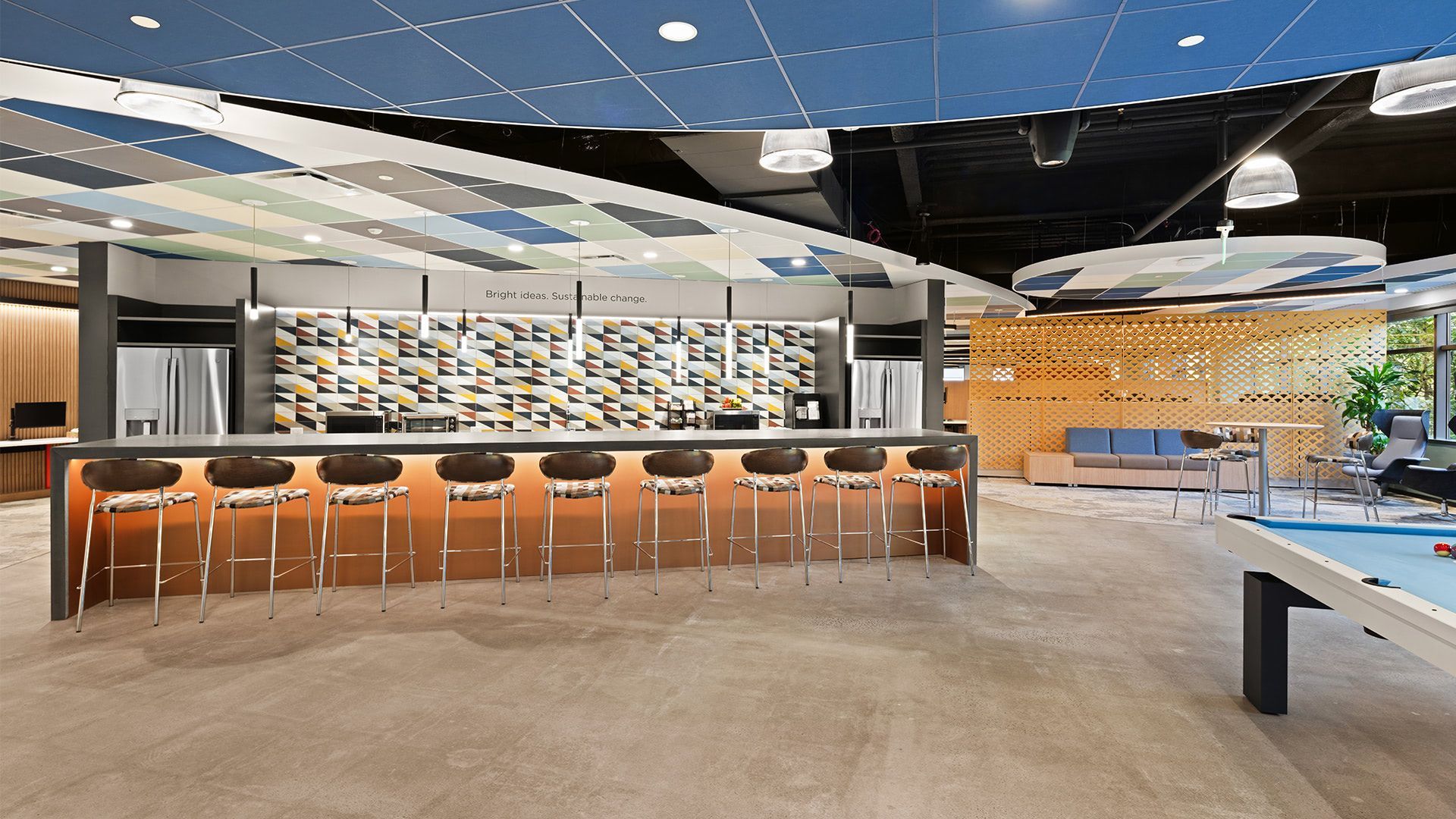
Inspired by Ramboll's Nordic heritage, the design concept focuses on creating a dynamic, human-centered workplace experience. The office is organized by a spiraling ceiling plan, rendered in various colors of Rockfon Stone Wool, that illustrates the Golden Section. Overlaid on that plan are three experiential zones (Energize, Incubate, and Catalyze), each supporting a different mode of work and interaction.
Energize spaces activate circulation areas through bold color, layered textures, translucency, and meandering flooring patterns that intuitively guide movement through the workplace. These environments encourage exploration and help employees connect with the spaces best suited to their tasks.
Incubate zones support collaboration, mentorship, and knowledge sharing. Flexible furniture arrangements, acoustic layering, and transparent design elements foster interaction across departments while maintaining visual connectivity throughout the office.
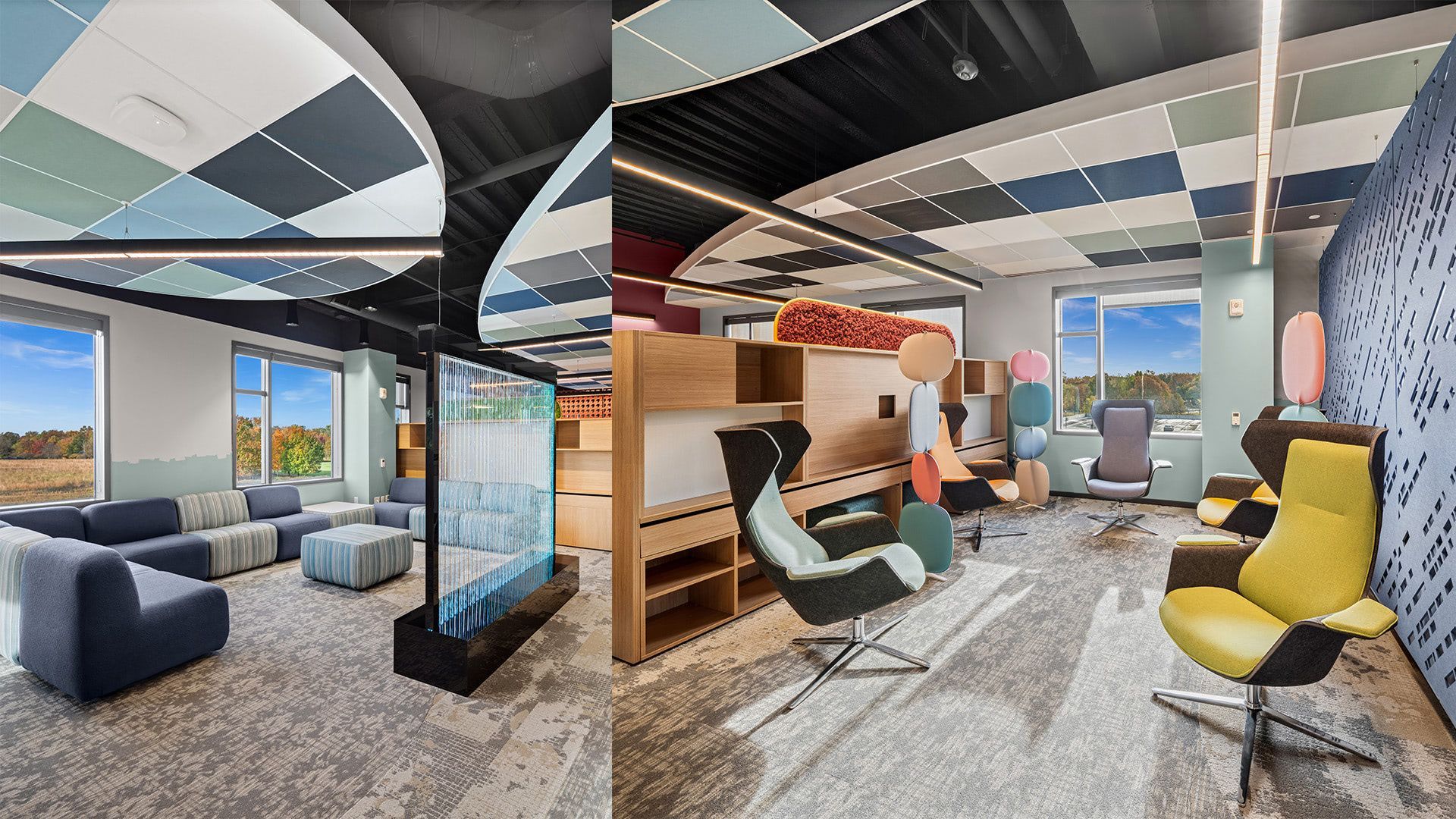
Catalyze areas serve as focused "home zones" designed for productivity and refinement. Residential details, biophilic elements by GreenMood, modular layouts, and integrated technology let employees personalize their work experience while supporting evolving team needs.
Together, the three zones create a workplace ecosystem that encourages curiosity, innovation, and shared discovery.
Supporting Connection in a Hybrid Workforce
The project responds directly to what today's workplaces are navigating: hybrid communication gaps, employee engagement, and mentorship across generations.
As younger employees increasingly seek the structure, support, and collaboration often associated with academic environments, the design introduces strategically distributed collaboration pods, informal gathering spaces, and technology-enabled meeting areas that promote spontaneous interaction and relationship building.
By emphasizing comfort, flexibility, and inclusivity, the office creates opportunities for connection while reinforcing trust between leadership and staff.
Neuroinclusive Design from the Start
Supporting neurodiversity and employee wellbeing was a priority from the earliest stages of planning.
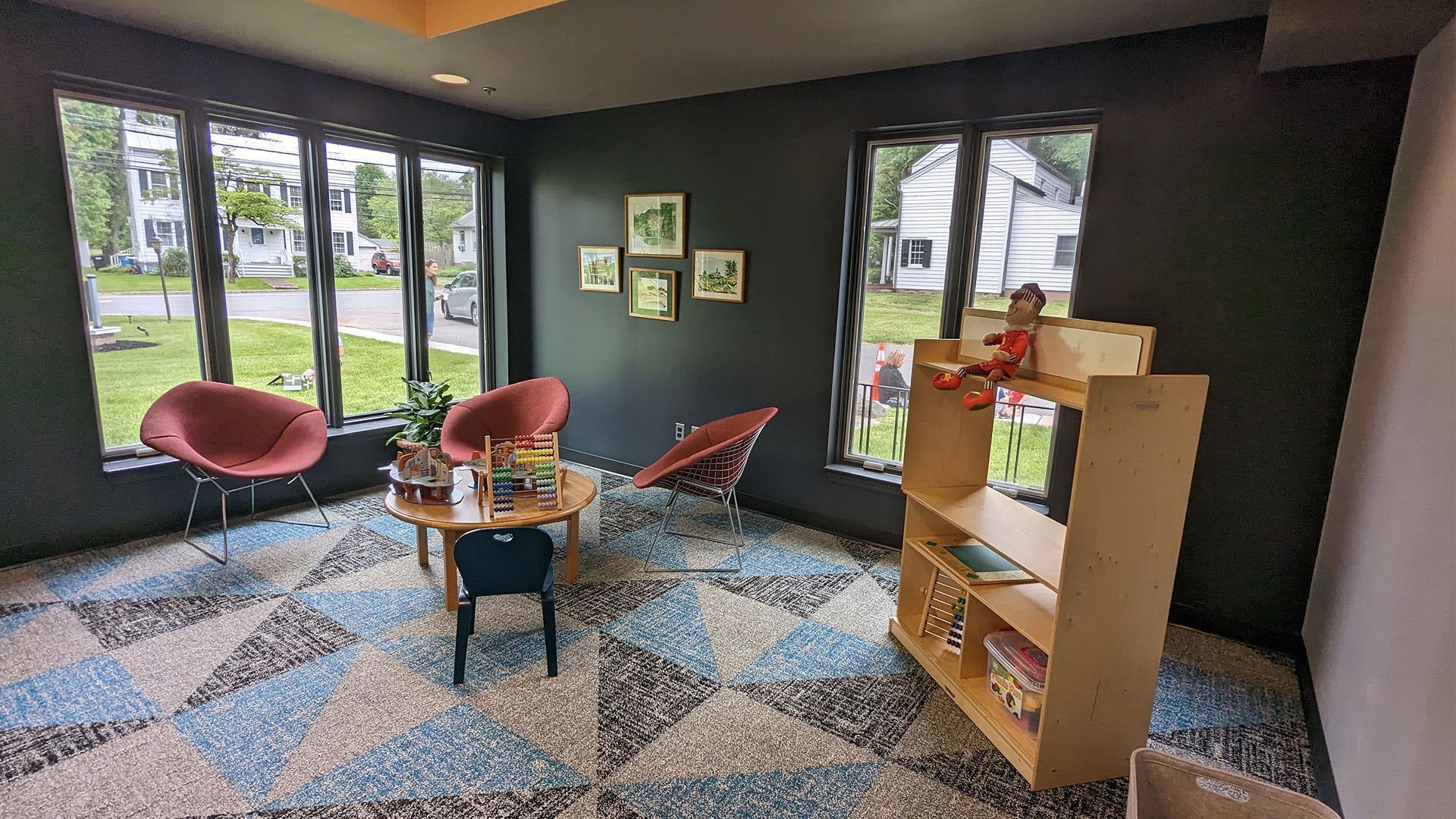
Activated social environments are balanced with quiet, restorative spaces that offer varying levels of visual and acoustic privacy, allowing employees to move between energetic and calming settings depending on their work style or personal preferences.
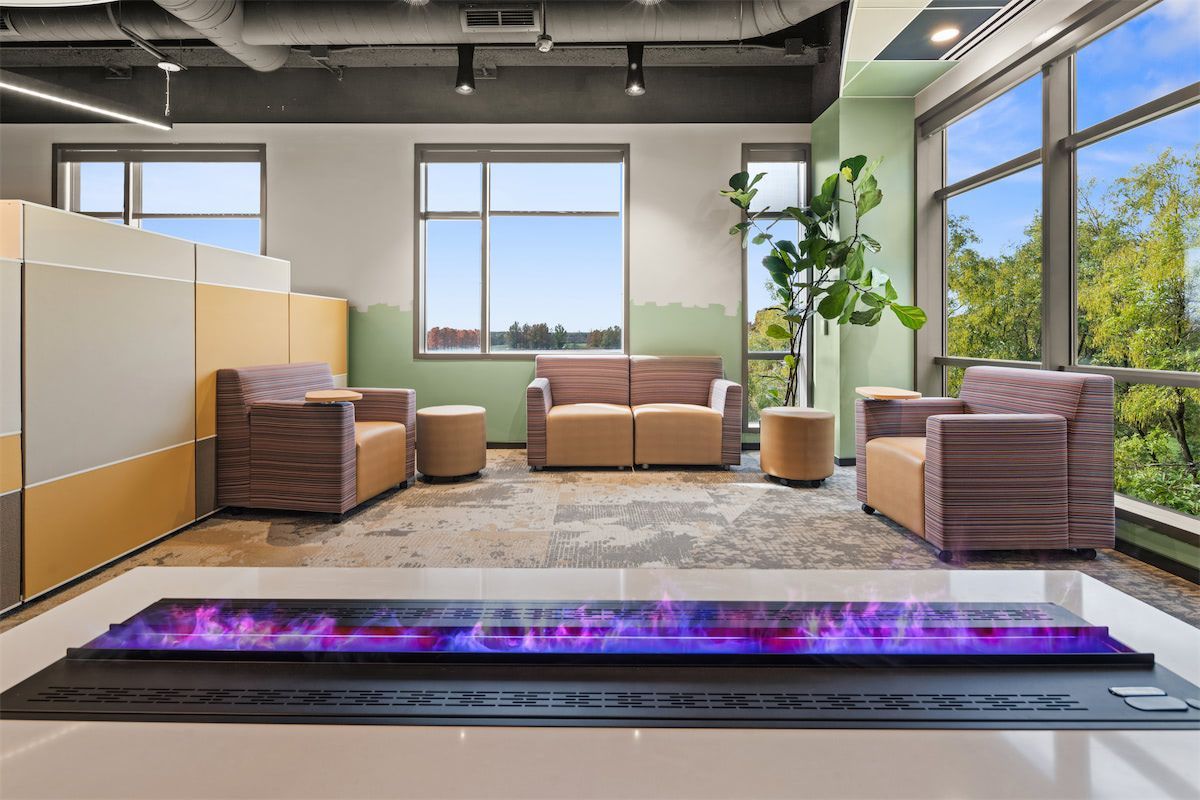
Amenity areas, including a gaming lounge, social hub, and open pantry, provide opportunities for relaxation and informal connection. Interactive features such as a vapor fireplace, bubble wall, and Sensitile countertop introduce movement, sound, and tactile engagement throughout the space. Adjustable acoustic elements by Snowsound give people greater control over their sensory environment, improving both comfort and focus.
Sustainability, Flexibility, and Human-Centered Materials
The workplace prioritizes adaptability over a one-size-fits-all office model. A spectrum of work settings ensures employees can find environments tailored to their needs while supporting accessibility, sustainability, and long-term flexibility.
Opening the perimeter of the suite maximized daylight deep into interior spaces, while glass-fronted offices maintain transparency and visual connection across collaborative areas and workstations.
Material selections reinforce both sustainability and sensory richness. Linear pendants from Lightly, fabricated from poplar wood, wool, and hemp, incorporate locally sourced, low-carbon materials, VOC-free finishes, and recyclable packaging. Warm textures and natural materials soften the modern industrial aesthetic and create a more residential atmosphere. AIS furniture systems emphasize mobility and adaptability through height-adjustable workstations and flexible configurations, while switchable glass technology lets meeting spaces transition between openness and privacy as needed.
Setting a New Workplace Benchmark
The completed Princeton office has become a benchmark for Ramboll's future global workplace projects. Rather than relying on a single signature feature, the design turns the entire environment into an immersive experience where collaboration, focused productivity, and wellbeing coexist.
By prioritizing autonomy, inclusivity, and experience-driven design, Ramboll's Princeton office shows how the future workplace can foster engagement not through obligation, but through meaningful human connection.
One Last Thought from Cornerstone
Perhaps the most unexpected part of this project came from our furniture vendor, the amazing Cathy Daler of AIS.
Walking the space at the end of the job, she observed that projects typically have framed views and focal points, a series of elements that build toward the "star" of the design, with her team strategizing about how best to fold into the overall setting. This project didn't follow that methodology. Cornerstone played up everything as the star, and it works brilliantly.
In her words: "You nailed every detail with this project! I have to rethink my strategy that everything can't be a star!!!"
See the full project.
Explore the complete Ramboll Princeton portfolio, including the full photo gallery.
Photography by Frank DiGiovanni.
Share this article
Recent Posts